
A company annual day is more than an evening of food, entertainment and awards. It is one of the few occasions when employees from different teams come together, step away from their usual work routine and celebrate what the organisation has achieved together. That makes the planning behind the event just as important as the event itself.
A successful company annual day needs the right balance of structure and entertainment. The venue should be comfortable, the theme should feel relevant, the programme should move at the right pace and employees should have enough opportunities to participate without feeling forced. Most importantly, the event should not feel like a repeat of last year’s celebration.
The good news is that planning an enjoyable annual day does not always require a bigger budget. It requires better choices. This guide covers the key areas HR teams and event organisers should focus on while planning a memorable annual day celebration.
Start With the Right Plan
A good annual day planning process starts well before the venue is booked. Before discussing themes or entertainment, decide what you want employees to take away from the event. Is the focus on celebrating business achievements, recognising employees, strengthening team bonding or simply giving everyone an evening to relax? Having a clear objective makes the rest of the decisions much easier.
Next, set a realistic budget and divide it across the major requirements. Venue, food, décor, production, entertainment, awards, photography and employee activities can quickly add up when they are planned independently. Creating broad budget categories early helps avoid spending too much on one element while compromising on another.
It is also useful to create a planning timeline. Lock the date and guest count first, followed by the venue, theme and major vendors. Entertainment, employee performances and award nominations can then be planned around the confirmed event format.
Finally, understand your audience. A celebration for a young workforce may look very different from one involving employees across multiple age groups, senior leadership and families. The best company annual day is one that feels inclusive rather than designed for only one section of the workforce.

Choose the Venue, Theme and Décor
The venue sets the foundation for your corporate annual day, so it should be selected for more than just its appearance. Check whether it can comfortably accommodate your guest count, stage, dining area and entertainment setup. Parking, accessibility, washrooms, power backup, acoustics and proximity to the workplace are equally important. A beautiful venue becomes a poor choice if employees struggle to reach it or cannot comfortably enjoy the programme.
The theme should also have a purpose. Instead of choosing a theme simply because it looks good in photographs, think about whether it connects with the company or the mood you want to create. A retro evening, awards-night format, carnival, Bollywood-inspired celebration or elegant gala can all work when the theme is carried consistently across the event.
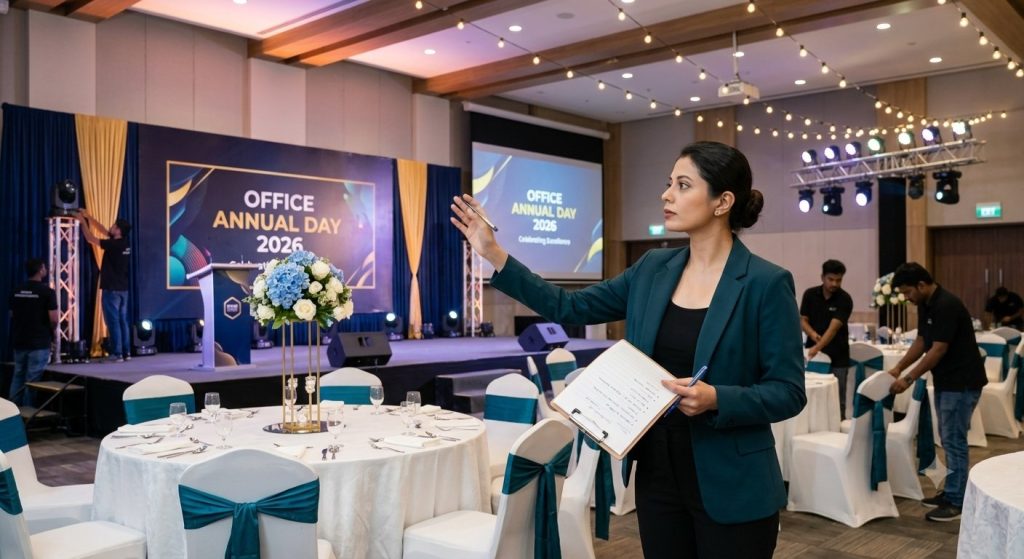
Once the theme is finalised, décor becomes easier to plan. Stage design, entrance elements, table settings, signage, lighting and photo zones should feel like parts of the same experience. You do not need to decorate every corner of the venue. A few well-designed focal points can create a stronger impact than excessive decoration.
For teams looking for practical annual day ideas, the key is to make the venue feel different from an ordinary corporate gathering without allowing the theme to overpower the actual celebration.
Plan Entertainment and Employee Participation
Entertainment is often the most anticipated part of a company annual day, but more entertainment does not automatically mean a better event. The programme should have enough variety to keep people interested without becoming a long sequence of unrelated performances.
Professional entertainment such as a live band, comedian, anchor, DJ, dance troupe or celebrity performance can be combined with employee performances. Employee participation is especially valuable because it makes the event feel like something the workforce has created, rather than something that has simply been presented to them.
However, participation should never become an obligation. Not every employee will want to dance or perform on stage. Include different ways to participate through games, team challenges, audience activities, award nominations, photo opportunities or informal interactions.
When planning annual day activities, think about the energy of the room. A high-energy performance may work well after dinner, while interactive games can help maintain engagement earlier in the programme. Avoid placing several long speeches or similar performances together.
The anchor also plays an important role. A good host can connect different parts of the programme, keep transitions smooth and bring the audience back into the event after quieter segments.
Get Awards, Food and Activities Right
Awards are an important part of many company annual functions, but they can easily become one of the longest and least engaging sections of the evening. Keep award categories relevant and make the recognition feel personal. Along with performance-based awards, consider recognising teamwork, innovation, customer focus, leadership and behind-the-scenes contributions.
Keep the award presentation moving. Long introductions for every recipient can slow down the programme, especially when there are many awards. A well-planned presentation with short citations, good visuals and clear stage movement can make recognition feel more special without taking up too much time.
Food is another area where planning matters more than simply choosing an impressive menu. Consider the guest count, dietary preferences, vegetarian and non-vegetarian options, serving time and whether the menu suits the venue and event format. A menu that is too elaborate can create queues and unnecessary wastage.
You can also introduce simple annual day activities around food and networking. Interactive food counters, themed stations, mocktail bars or dessert counters can encourage employees to move around and interact rather than staying with the same group throughout the evening.
Build a Smooth Event Flow
Even the best annual day celebration can lose its impact if the programme does not flow well. Think of the event as a journey rather than a list of activities. The beginning should create excitement, the middle should build energy and recognition and the closing should leave people with a strong final impression.
A simple flow could include guest arrival and registration, welcome activities, the opening address, a short company-year recap, employee performances, awards, professional entertainment, dinner and a closing segment. The exact order can change depending on the audience and venue, but the programme should always have a clear rhythm.
Keep speeches focused. Leadership messages are important, but an annual day is not the place for a long business presentation. Use videos, photographs and short highlights to showcase achievements instead.
To make the event feel fresh, change at least one major element every year. This could be the format, theme, award presentation, entertainment style, interactive activity or way employees are involved. Reviewing feedback from the previous corporate annual day can also reveal what employees actually enjoyed and what felt repetitive.
The goal is not to make every minute different. It is to make sure every part of the evening has a reason to be there.
To conclude…
A successful company annual day is built around the employee experience. From the venue and theme to entertainment, awards, food and activities, every decision should contribute to an event that feels enjoyable and well planned. The best celebrations are not necessarily the biggest or most expensive ones. They are the ones where employees feel recognised, included and genuinely happy to be part of the organisation. Start planning early, understand your audience and focus on creating a balanced experience rather than simply filling the evening with activities.
Planning Your Company’s Annual Day?
Find Vendors by Corporate Event Types
Whether you’re organising a small, in-office celebration or a major outdoor event to celebrate the annual day, the right vendors make the difference between an event that runs and one that lands.
FAQs
1. How early should you start planning a company annual day?
Ideally, start planning two to three months in advance. Larger events may require more time for venue bookings, entertainment, employee performances, vendor coordination and rehearsals.
2. What are some good annual day ideas?
Themes, live entertainment, employee performances, interactive games, awards, photo zones, team challenges and themed food counters can all make an annual day more engaging.
3. How can we make our annual day different from previous years?
Change the theme, entertainment format, award presentation or participation model. Employee feedback from previous events can also help identify what should be retained or replaced.
4. What should be included in a company annual function?
A typical programme can include a welcome, leadership address, company highlights, employee performances, awards, entertainment, dinner and a closing segment.
5. How can HR make an annual day enjoyable for everyone?
Focus on variety and inclusion. Give employees different ways to participate, keep speeches short, and provide tasty food and seating. Avoid designing the entire event around one type of entertainment.