
Planning an event is exciting until it comes down to budgeting.
From the venue and food to décor, entertainment, production and logistics, there are plenty of things competing for the same budget. And if you don’t plan your spending before you start booking vendors, it’s easy for small costs to add up quickly.
The good news is that planning an event without overspending isn’t about cutting costs everywhere. It’s about knowing where your money needs to go, comparing your options and keeping some room for the unexpected.
In this guide, Event Bazaar will break down how to create an event budget that works for your event and your wallet.
1. Start With Your Total Event Budget
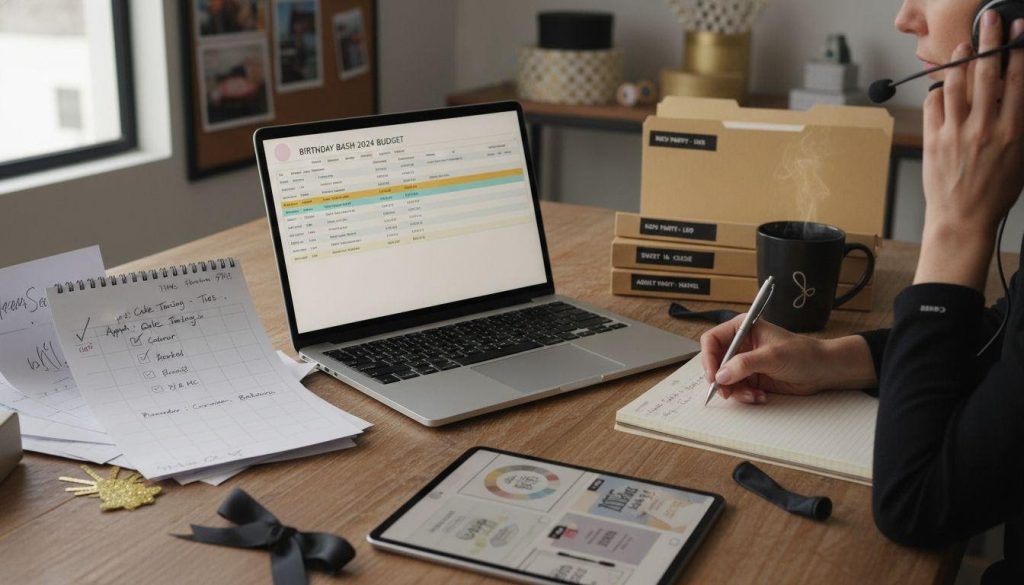
Before you start looking at venues or contacting vendors, decide how much you are actually comfortable spending.
This is your maximum event budget. Once you have that number, you can work backwards and decide how much each part of the event should get.
For example, if you have a ₹5 lakh budget, don’t start by spending ₹3 lakh on the venue and figure out the rest later. First understand everything the ₹5 lakh needs to cover.
Consider:
- Number of guests
- Type of event
- Location
- Event duration
- Must-have services
- Nice-to-have additions
Most importantly, don’t allocate 100% of your budget immediately. Keep some money aside for unexpected expenses.
2. Divide Your Budget Into Key Categories
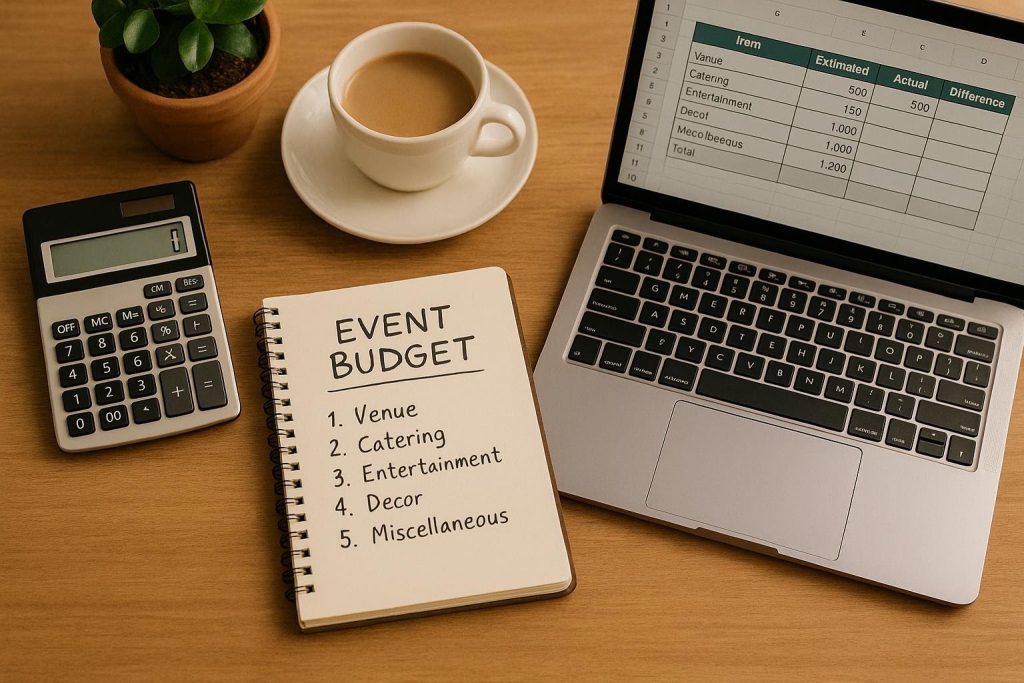
Once you know your total budget, break it down into the major parts of your event.
Venue
The venue isn’t always just the rental fee.
Check whether your quote includes:
- Furniture
- Electricity
- Cleaning
- Security
- Parking
- Setup and dismantling
- Extra hours
- Outside vendor charges
A venue with a lower rental price isn’t necessarily cheaper once all the additional costs are added.
Food and Catering
Catering costs usually depend on the number of guests and the menu, but there can be other charges too.
Ask about:
- Cost per plate
- Beverages
- Dessert
- Service staff
- Equipment
- Special dietary requirements
- Taxes and service charges
Always understand the complete catering cost before finalising it.
Décor
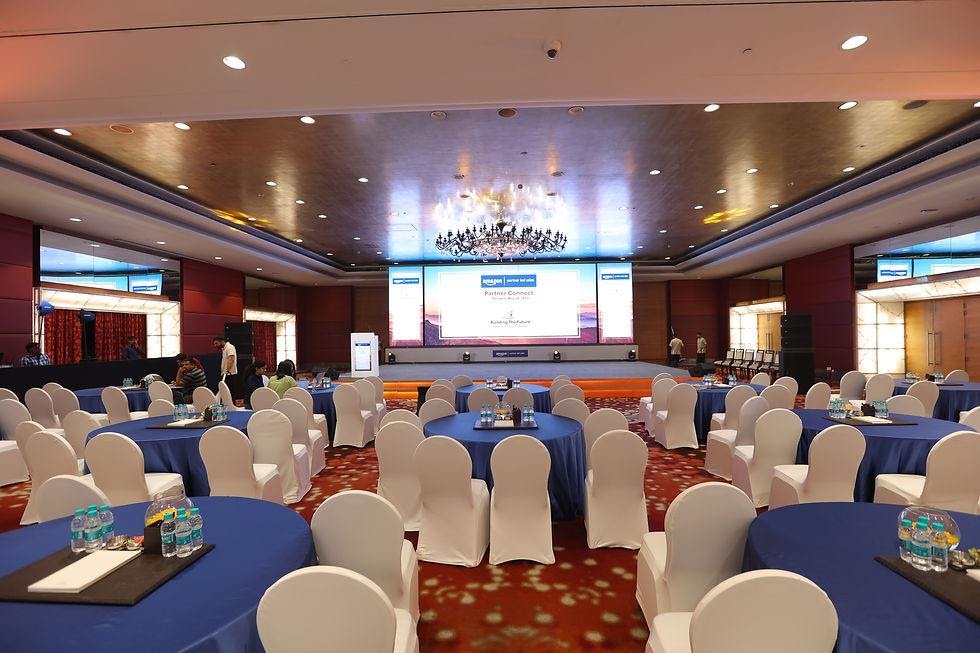
Décor can take up a small or significant part of your budget depending on the event.
Instead of decorating every corner, decide which areas matter most.
For example, you could prioritise the entrance, stage or main guest area and keep the rest simpler.
Entertainment
Depending on the event, this could include DJs, live musicians, performers, anchors, games or other experiences.
Choose entertainment based on what your audience will actually enjoy rather than simply adding more activities.
Production
Production is easy to forget while creating an initial budget.
Depending on your event, you could need:
- Sound
- Lighting
- Stage
- Screens
- Projectors
- Microphones
- Power backup
- Technical crew
Ask vendors exactly what their quote includes.
Logistics
Transport, delivery, loading and unloading, parking, accommodation and storage can all add to your final bill.
These costs might seem small individually, but together they can make a noticeable difference.
3. Prioritise What Matters Most
You don’t have to spend equally across every category.
Ask yourself:
What will actually matter to the people attending this event?
For a corporate conference, production, sound and seating could be more important than elaborate décor.
For a wedding, the venue, food and décor could take priority.
For a birthday party, entertainment, food and décor might matter more.
Your priorities should decide where you spend more and where you keep things simple.
A useful question to ask is:
“If I had to remove three things from this event, what would I remove first?”
Whatever you don’t mind removing probably shouldn’t take up a large part of your budget.
4. Look Out for Hidden Event Costs
The first quote you receive isn’t always the final amount you’ll pay.
Some common additional costs include:
- Taxes
- Service charges
- Delivery fees
- Setup charges
- Overtime
- Additional staff
- Transportation
- Equipment rentals
- Printing
- Last-minute additions
- Venue-related charges
Before confirming a vendor, ask:
“Is this the final cost, or are there any additional charges?”
It is a simple question, but it can save you from an unpleasant surprise later.
5. Keep a Contingency Amount
No matter how carefully you plan, something can change.
Your guest count could increase. A vendor could need additional setup time. You could need extra equipment or transport.
That’s why keeping a contingency amount is important.
A common approach is to keep around 5–10% of your total event budget aside for unexpected expenses.
For a ₹5 lakh event, that would mean keeping around ₹25,000–₹50,000 untouched unless you actually need it.
And if you don’t use it? Even better.
6. Compare Vendors Before You Book
One of the easiest ways to overspend is choosing the first vendor you speak to.
Before making a decision, compare your options based on:
- Price
- What’s included
- Experience
- Reviews or references
- Availability
- Additional charges
- Cancellation terms
But don’t compare only the final price.
A ₹50,000 quote that includes everything could be better value than a ₹40,000 quote that adds another ₹15,000 in extras later.
Compare the complete offering, not just the number on the quote.
7. Know When to Spend and When to Save
Not every part of your event needs the most expensive option.
Spend more where it directly improves the experience.
Save where the difference won’t really be noticed.
For example, you could spend more on a professional sound setup for a corporate event while keeping printed materials simple.
The goal isn’t to find the cheapest option for everything.
It’s to make sure every rupee has a reason.
8. Keep Track of Your Spending
Once you start booking vendors, keep one simple tracker for the entire event.
| Category | Estimated Cost | Final Cost | Paid | Balance |
|---|---|---|---|---|
| Venue | ₹ | ₹ | ₹ | ₹ |
| Catering | ₹ | ₹ | ₹ | ₹ |
| Décor | ₹ | ₹ | ₹ | ₹ |
| Entertainment | ₹ | ₹ | ₹ | ₹ |
| Production | ₹ | ₹ | ₹ | ₹ |
| Logistics | ₹ | ₹ | ₹ | ₹ |
| Miscellaneous | ₹ | ₹ | ₹ | ₹ |
Screenshot this and update it every time a cost changes.
This gives you a clear picture of what’s already spent, what’s still pending and how much of your budget is left.
Conclusion
A well-planned event budget isn’t about spending as little as possible.
It’s about knowing what matters, planning your spending, comparing your options and keeping room for the unexpected.
Start with your total budget, divide it across the important categories, check the fine print on vendor quotes and keep a contingency amount aside.
And when you’re comparing vendors, having different options in one place can make the process much easier.
From venues and catering to décor, entertainment, photography and more, you can explore event vendors on eventbazaar.com.
Event planning, Ab Easy Hai.
FAQs
1. How do I create a budget for an event?
Start by deciding your total budget and then divide it across major categories such as venue, catering, décor, entertainment, production and logistics. Keep around 5–10% aside for unexpected expenses.
2. What are the biggest expenses when planning an event?
The biggest expenses usually include the venue, catering, décor, entertainment and production. The exact split depends on the type, size and location of the event.
3. How can I reduce event costs without compromising the experience?
Prioritise the parts of the event that matter most to your guests and compare multiple vendors before choosing. You can also simplify areas that have less impact on the overall experience.
4. What are some hidden costs in event planning?
Taxes, service charges, delivery, setup, overtime, additional staff, transportation and equipment rentals are some common costs that people forget to include in their initial budget.
5. Should I keep a contingency budget for an event?
Yes. Keeping around 5–10% of your total event budget aside can help cover unexpected expenses without affecting the rest of your plans.
6. How can I compare event vendors?
Compare vendors based on their pricing, inclusions, experience, availability, reviews, additional charges and cancellation terms. Don’t compare only the headline price.