Your wedding outfit is one of the most photographed, most remembered decisions you will ever make. In modern Indian weddings, couples are no longer choosing outfits in isolation — coordinated bride and groom looks have become one of the defining trends shaping how weddings look, feel, and are remembered.
But coordination does not mean matching identically. The most stylish couples balance their palettes — complementing each other through colour, embroidery tone, and fabric texture, rather than wearing the same outfit in different cuts.
Whether you are drawn to regal reds, dreamy pastels, or luxurious jewel tones, this guide covers the five most-loved bride and groom colour combinations for Indian weddings in 2026, with styling tips you can actually use.
Table of Contents
- Classic Red and Ivory
- Pastel Pink and Beige
- Emerald Green and Gold
- Ivory and Gold — Minimal Luxury
- Maroon and Gold
- How to Coordinate Without Over-Matching
- FAQs
1. Classic Red and Ivory — The Timeless Choice
Few wedding pairings carry as much cultural weight as a deep red bridal lehenga beside an ivory sherwani. This combination has endured for generations because it works — it photographs beautifully under any lighting, complements heritage jewellery, and needs no explanation in almost any Indian wedding context.
The red symbolises celebration, love, and new beginnings. The ivory offsets it without competing — creating visual contrast that is elegant rather than dramatic.
Why this combination works in 2026: Couples are reviving this pairing with contemporary touches — structured lehenga silhouettes, tonal gold-on-ivory embroidery, and fluid drape styles that feel modern while honouring tradition.
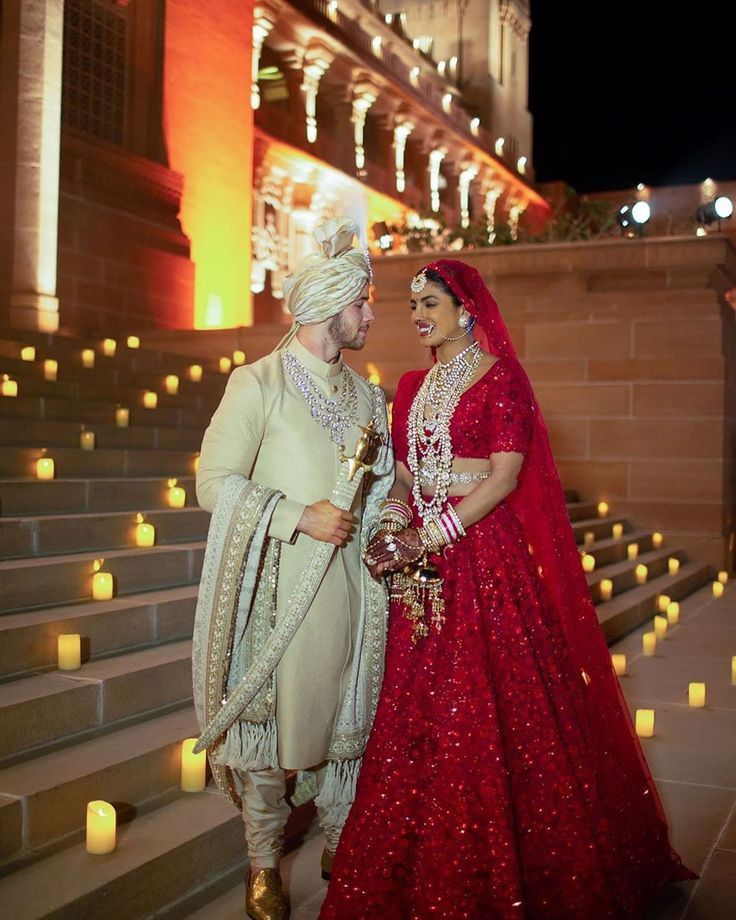
Styling direction:
- Brides: Deep red or scarlet lehenga with zardozi or dabka embroidery in gold, paired with layered kundan or polki jewellery
- Grooms: Ivory bandhgala or achkan with subtle thread embroidery, pearl mala, and a matching ivory or cream safa
- The coordination cue: match the embroidery tone (gold) rather than the base colour
Best suited for: North Indian weddings, palace venues, traditional Gujarati ceremonies, indoor grand celebrations
2. Pastel Pink and Beige — The Modern Romantic Look
Soft, warm, and effortlessly sophisticated — pastel pink and beige has become one of the most-requested colour pairings for contemporary Indian weddings, particularly for destination events, resort weddings, and outdoor ceremonies.
The appeal is in the lightness. Against natural daylight, floral mandap décor, or soft white marble venues, these tones photograph with a warmth that darker palettes cannot replicate. The look also suits a wide range of skin tones and bridal jewellery styles.
Why couples love this in 2026: The minimalist luxury movement in Indian bridal fashion is still growing. Couples who want their outfits to feel premium and fashion-forward without leaning heavily towards traditional are gravitating towards this palette.
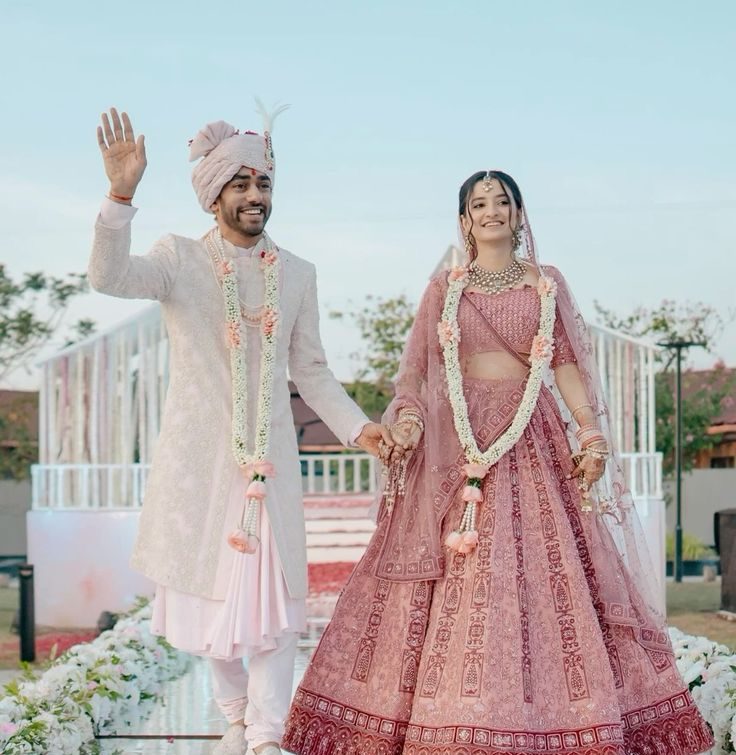
Styling direction:
- Brides: Blush or dusty rose lehenga with floral hand embroidery, pearl or diamond jewellery, minimal makeup with dewy skin
- Grooms: Pastel beige or warm ivory sherwani, tonal embroidered dupatta or stole, pearl mala
- The coordination cue: match the warmth of the undertone — both outfits should lean either warm (peachy-pink, warm beige) or cool (rosy pink, greige), not a mix
Best suited for: Outdoor and garden weddings, destination weddings, daytime pheras, resort celebrations, intimate luxury gatherings
3. Emerald Green and Gold — Royal and Unforgettable
Emerald green has been building momentum in Indian bridal fashion for the past two years, and in 2026, it shows no signs of slowing down. This is the choice for couples who want their look to command attention — rich, regal, and deeply cinematic.
The combination of emerald and gold draws from Mughal aesthetics and South Indian bridal traditions, giving it a cultural resonance that feels both timeless and trend-aware.
Why this combination works in 2026: Against candlelit receptions, dark floral décor, and warm gold table settings, emerald green creates a dramatic visual contrast that photographs brilliantly. For evening weddings especially, this palette elevates the entire visual aesthetic.
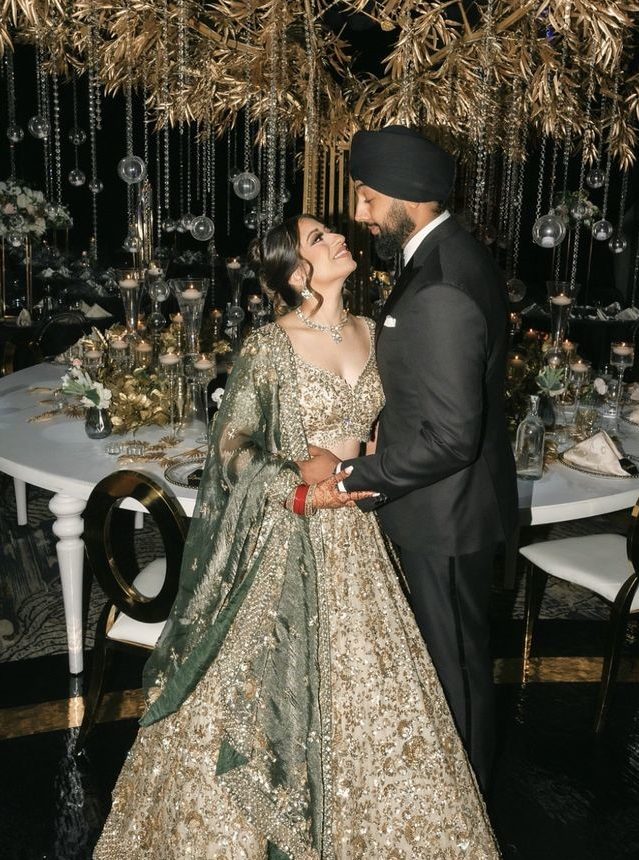
Styling direction:
- Brides: Heavily embellished gold lehenga with an emerald green dupatta, or a deep emerald lehenga with gold zardozi work; pair with emerald stone chokers, layered diamond sets
- Grooms: Deep green sherwani or bandhgala, or a classic black tuxedo with an emerald pocket square or safa for modern-luxury contrast
- The coordination cue: the dupatta or stole is the bridge — let the bride’s emerald dupatta echo the groom’s primary outfit colour
Best suited for: Evening receptions, palace and heritage venues, luxury hotel celebrations, glamorous indoor ceremonies
4. Ivory and Gold — Understated, Unforgettable
The ivory-and-gold combination represents a shift that has been reshaping Indian bridal fashion — away from maximalism and towards considered, craftsmanship-forward dressing. This is the palette of couples who understand that restraint, executed well, is its own form of luxury.
Inspired in part by the quiet elegance of celebrity weddings that chose soft tones over drama, ivory and gold ask jewellery, embroidery, and silhouette to do the storytelling instead of colour.
Why this combination works in 2026: As weddings become more intimate and photography-driven, couples are choosing outfits that age well in photographs — and ivory does. It catches light beautifully, reads as warm or cool depending on the setting, and never competes with the background.
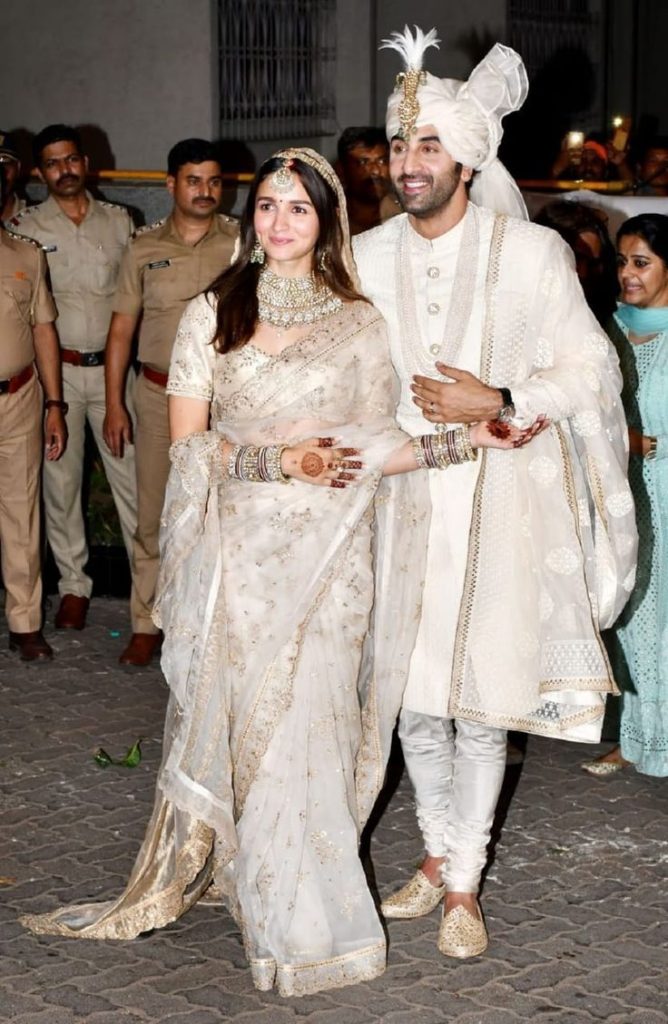
Styling direction:
- Brides: Ivory lehenga or saree with delicate gold embroidery — chikankari, resham work, or fine thread details; pair with statement polki or kundan jewellery to anchor the softness
- Grooms: Ivory or off-white sherwani with textured gold embroidery on the collar and cuffs, embroidered stole, tonal safa
- The coordination cue: both outfits should share the same shade of ivory — warm cream or cool white, not a mixture of both
Best suited for: Intimate and destination weddings, luxury home ceremonies, modern palace weddings, daytime pheras, and contemporary traditional celebrations
5. Maroon and Gold — Traditional Grandeur, Modernised
Maroon and antique gold are the classic Indian wedding pairing at its most confident. It carries the weight of tradition while being visually rich enough to hold its own in any grand setting — and that balance is exactly why couples keep returning to it.
Unlike bright red, maroon has a depth that feels considered and mature. Paired with heritage-style gold embroidery, it creates a bridal look that feels like it belongs to history without being dated.
Why this combination works in 2026: There is a strong counter-movement to the pastel trend — couples who want grandeur, who are celebrating with hundreds of guests in large venues, are choosing palettes that match the scale of the occasion. Maroon and gold answers that call.
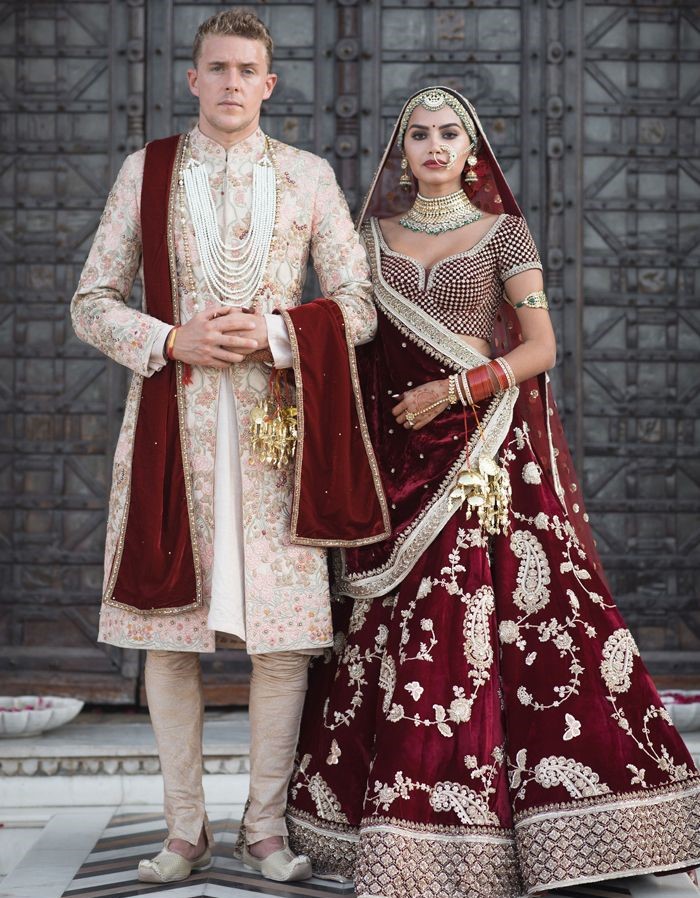
Styling direction:
- Brides: Heavily embroidered maroon bridal lehenga with antique gold detailing, velvet dupatta, layered kundan jewellery, statement nath
- Grooms: Ivory or champagne sherwani with a maroon velvet stole or dupatta — this creates the coordination without dressing them identically; embroidered stole, pearl mala, antique brooch
- The coordination cue: the groom’s stole colour should echo the bride’s lehenga — this is the simplest and most effective way to tie two outfits together
Best suited for: Palace and heritage venue weddings, winter weddings, large North and South Indian celebrations, and indoor grand ceremonies
How to Coordinate Bride and Groom Outfits Without Over-Matching
The most common mistake couples make is confusing coordination with uniformity. Wearing the same colour in the same fabric from head to toe rarely photographs well and can flatten the visual dynamic between two outfits.
True coordination works through connection points — small shared elements that tie two looks together without making them identical.
The most effective coordination cues are:
Embroidery tone — both outfits use the same metallic (gold, silver, antique rose gold) even if the base colours differ entirely. This creates visual harmony that reads immediately in photographs.
Dupatta or stole colour — the groom’s stole or dupatta echoes the bride’s lehenga colour, or vice versa. This is the most popular coordination technique in current Indian wedding fashion.
Fabric texture — matching velvet-to-velvet, silk-to-silk, or tissue-to-tissue creates a cohesive tactile aesthetic even when colours differ.
Jewellery undertone — both partners use warm gold-toned or cool silver-toned accessories; mixing creates visual noise.
The overall light balance — both outfits should read as similar tonal weights. A very heavily embellished bridal lehenga pairs better with a clean, structured sherwani than with an equally ornate one.
Planning Your Wedding Look with EventBazaar.com
Finding the right bridal designer, groom’s wear specialist, or wedding stylist makes the difference between an outfit you love in person and one that you love in every photograph for the rest of your life.
At EventBazaar.com, you can discover and connect with trusted wedding professionals across India — including bridal wear designers, groom stylists, makeup artists, photographers, and full-service wedding planners in cities including Mumbai, Delhi, Ahmedabad, Surat, Bengaluru, Hyderabad, and Jaipur.
Browse verified profiles, see real portfolio work, and get in touch with vendors who have worked on weddings like yours.
Frequently Asked Questions
Which colour combination is best for Indian wedding outfits?
How can a bride and groom coordinate outfits without matching exactly?
Are pastel wedding outfits still trending in 2026?
What are the best outfit colours for wedding photography?
What is the most popular groom's outfit colour for Indian weddings?
Can the bride and groom wear completely different colours?
Looking for trusted Event Vendors near you? Browse verified vendor profiles on EventBazaar.com — India’s wedding planning and vendor discovery platform.