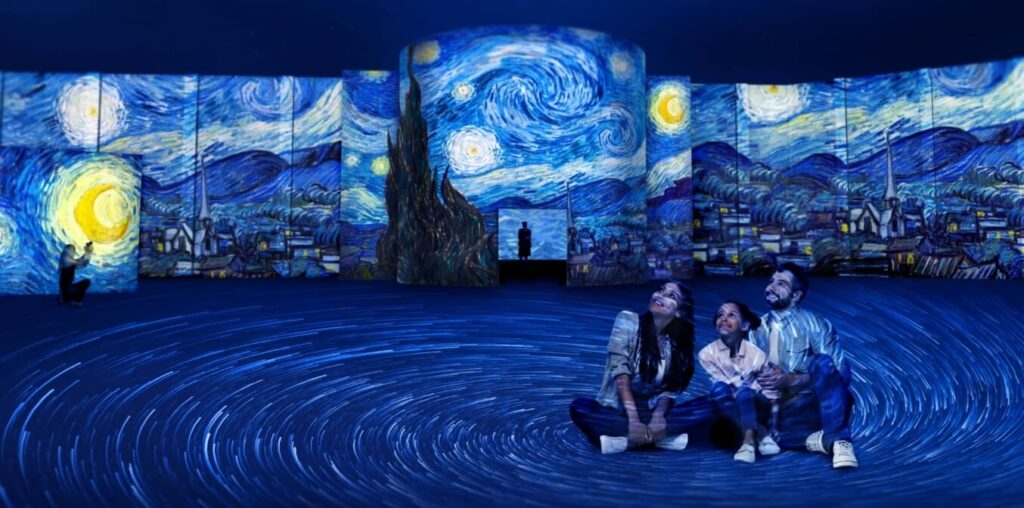
Today’s guests don’t just attend events; they experience them. A beautifully decorated hall used to be enough to impress. Now, it’s the baseline expectation, not the highlight. Welcome to the era of experiential events, where the goal isn’t just to look good in photos; it’s to give guests something they actually remember, feel and talk about afterwards.
This shift isn’t just an aesthetic trend. It reflects a real change in what guests, whether at a wedding, a corporate launch or a brand activation, actually value. Decor sets the scene. Experience is what people carry with them once the event is over.
In this guide, we break down what experiential events actually are, why they’re outperforming decor-first design, real examples of what this looks like in practice and a practical framework for building one.
What Are Experiential Events?
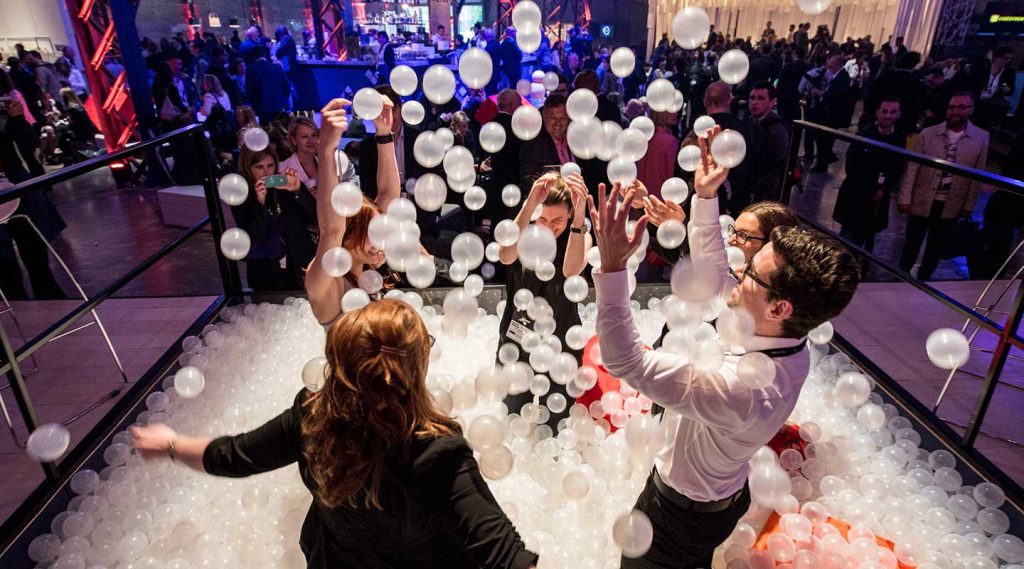
Experiential events are events designed around participation, not just presentation. Rather than guests passively observing a beautifully set stage or a well-styled venue, they’re actively part of the experience itself.
At their core, experiential events are built to:
- Engage the senses: sound, touch, taste and movement, not just visuals
- Create memories: moments specific enough that guests remember and describe them afterwards, rather than a generic sense that “it was a nice event”
- Encourage interaction: with the space, with the content and with each other, rather than sitting through a passive program
The distinction matters because decor and experience aren’t competing priorities; they work together. But decor alone creates a backdrop. Experience creates a story guests actually remember.
Why They Matter
The rise of experiential events isn’t just a design preference; it’s backed by how people actually respond to events built this way.
- Higher engagement: interactive formats keep guests present and involved, rather than checking their phones or drifting to the sidelines
- Better recall: people remember what they did at an event far more clearly than what they saw; participation creates stronger memory than observation
- Stronger emotional connection: shared, active moments build more genuine connection between guests and between guests and the brand or host than a passive, well-decorated backdrop ever can
For brands and hosts, this translates directly into value. An event people remember and talk about extends its impact well beyond the day itself, through word of mouth, social sharing and the way it shapes how guests feel about the brand or occasion behind it.
Decor vs. Experience: What’s the Difference?
It’s worth being precise about this distinction, since decor and experience often get treated as the same thing when they’re actually solving different problems.
| Aspect | Decor-Focused Events | Experiential Events |
|---|---|---|
| Guest role | Observer | Participant |
| Primary goal | Visual impact | Memory and connection |
| What’s remembered | How it looked | What they did and felt |
| Success measure | Photos, aesthetics | Engagement, recall, word of mouth |
This isn’t an argument against decor; a well-designed space is still the foundation any event is built on. But decor alone caps out at admiration. Experience is what turns admiration into a story guests actually retell.
Examples of Experiential Events
Experiential design shows up differently depending on the type of event, but a few formats have become especially popular:
- Interactive installations: physical setups guests can touch, walk through or manipulate, from projection-mapped walls to installations that respond to movement or sound
- Live experiences: live art, live music built around audience participation or performances that unfold around guests rather than in front of them
- Personalised zones: spaces tailored to individual guests, such as customisation stations, personalised gifting corners or areas that adapt based on guest preferences collected in advance
What ties these together is that each one gives guests something to do, not just something to watch. That single shift, from spectator to participant, is what defines the experiential approach.
These formats also scale differently depending on event type. A corporate brand activation might lean heavily on interactive installations and personalised zones to reinforce brand identity, while a wedding might favour live experiences, a live painter capturing the event in real time or an interactive photo or memory wall guests build together over the course of the evening.
How to Create One
Building an experiential event doesn’t require an unlimited budget, but it does require a different starting point than traditional event planning.
Start with the guest journey. Rather than planning event elements in isolation (stage, décor, catering, entertainment), map out the full arc of what a guest experiences from arrival to departure. Identify the moments where they’re waiting, transitioning or otherwise passive, these are exactly the points where experiential elements have the most impact.
Add interaction points. Once you understand the guest journey, look for natural moments to introduce participation, an entrance moment, a mid-event activity, a personalised takeaway. These don’t need to dominate the event; even two or three well-placed interaction points can transform how the whole event feels.
Focus on storytelling. The strongest experiential events aren’t a random collection of interactive elements, they’re built around a coherent theme or narrative that ties everything together. Guests should be able to sense a thread connecting the entrance experience, the activities and the overall atmosphere, rather than encountering a set of disconnected gimmicks.
Brief your vendors on the journey, not just their individual deliverable. A décor vendor, an entertainment act and a catering team can each do excellent individual work and still produce a disjointed event if none of them understand the guest journey as a whole. Sharing the full arc, not just each vendor’s isolated task, is often what separates an event that feels cohesive from one that feels like a collection of separately booked services.
Common Mistakes to Avoid
A few patterns tend to undercut experiential events, even with good intentions and reasonable budgets:
- Treating interaction as decoration: adding an installation purely because it looks good in photos, without connecting it to the guest journey or overall story
- Overloading guests with options: too many interactive elements at once can overwhelm rather than engage; a few well-placed moments outperform a crowded activity list
- Ignoring the passive moments: queues, transitions and waiting periods are often left untouched, even though they’re some of the easiest places to add a small experiential touch
- Losing sight of comfort basics: an interactive event still needs good food, comfortable seating and smooth logistics; experience design should add to a well-run event, not distract from it
Décor impresses. Experiences stay. The events guests remember years later are rarely defined by how the venue looked; they’re defined by what guests did, felt and shared while they were there.
Explore Vendors and Venues around you
From interactive installation specialists to live experience performers and personalisation vendors, meet the right partners to bring an experiential concept to life.
FAQs
1. Are experiential events more expensive than traditional decor-focused events?
Not necessarily. Experiential elements can range from a few well-placed interactive touches to full-scale installations; the cost depends on scale and complexity, not on whether an event is experiential at all. Even a modest budget can support two or three meaningful interaction points.
2. Are experiential events only suitable for large-scale or corporate events?
No, the approach works at any scale. A small wedding can include a personalised welcome moment or a guided guest journey just as effectively as a large brand activation can include a full interactive installation.
3. How do I measure whether an experiential event actually worked?
Look beyond guest count and decor photos. Social sharing, engagement with interactive elements and direct guest feedback are far better indicators of whether the experience actually landed than how the event photographed.
4. Can experiential elements be added to an already-planned traditional event?
Yes, though it works best when planned in from the start. Even late in the planning process, adding one or two interaction points, a personalised touch at entry, a guided activity mid-event, can meaningfully shift how the event feels without requiring a full redesign.
5. What’s the difference between experiential events and simply having entertainment at an event?
Entertainment is usually something guests watch. Experiential design is built around active participation, guests doing, touching or shaping part of the event themselves, rather than observing a performance from a distance.